
Chair: Assoc. Prof. Cheng Wang, Nanjing University of Science and Technology, China

Cheng Wang received the B.S. degree in electrical engineering and automation from Southwest Jiaotong University, Chengdu, China, in 2011, and the Ph.D. degree in electrical engineering from Huazhong University of Science and Technology, Wuhan, China, in 2018. From 2014 to 2018, he was a Research Assistant with the Department of Electrical and Computer Engineering, Lehigh University, PA, USA. He joined Nanjing University of Science and Technology as an Associate Professor in 2018. His research interests include microgrids, high penetrative grid-interactive photovoltaic systems, MV/HV ac-dc/dc-ac power electronics converter systems, modular multilevel converters, and uninterrupted power systems. Dr. Wang is currently an Associate Editor for IEEE OPEN JOURNAL OF POWER ELECTRONICS, and Protection and Control of Modern Power Systems.
Co-chair: Dr. Tao Zhou, Nanjing University of Science and Technology, China
 Tao Zhou is a lecturer and master's supervisor in the School of Automation, Nanjing University of Science and Technology. His main research focuses on the stability and control of new-type power systems, as well as the application of artificial intelligence in power systems. In recent years, he has presided over projects such as the Jiangsu Provincial Natural Science Foundation and the Open Fund of State Key Laboratory. He serves as deputy secretary-general of the Power Grid Stability Control Technology Subcommittee of IEEE PES Power System Relaying & Control Satellite Committee-China. He has been awarded the Second Prize of Jiangsu Provincial Electric Power Science and Technology Progress, and was selected as a Key Young Science and Technology Talent by the Ministry of Industry and Information Technology, as well as a "Double Creation" Doctor in Jiangsu Province.
Co-chair: Dr. Xiongfeng Fang, Nanjing University of Science and Technology, China
 Xiongfeng Fang received the B.Eng. and Ph.D. degrees in Electrical Engineering from Huazhong University of Science and Technology, Wuhan, China, in 2018 and 2023, respectively. He is currently a Lecturer with the School of Automation, Nanjing University of Science and Technology. His research interests include modular multilevel converters, DC circuit breakers, and DC grids. He currently leads several research projects, including a project funded by the Basic Research Program of Jiangsu and an Open Fund project of a National Key Laboratory. In 2024, he was selected for the Jiangsu Association for Science and Technology (Jiangsu CAST) Young S&T Talent Support Program. He has published over 20 academic papers.
Co-chair: Prof. Hao Quan, Nanjing University of Science and Technology, China
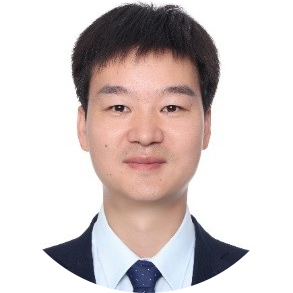 Hao Quan is currently a Professor and Doctoral Supervisor with the Nanjing University of Science and Technology, China. He received the Ph.D. degree in electrical and computer engineering from the National University of Singapore, Singapore, in 2014. He was a Research Scientist with A*STAR, Singapore, from 2014 to 2018. His research interests include uncertainty quantification, probabilistic forecasting, renewable integration, and application of artificial intelligence into smart grids. He has been the PI of 10 research projects, including National Research Foundation of Singapore, National Natural Science Foundation of China, Natural Science Foundation of Jiangsu Province and Key Technology Projects of the power grid company etc. He was selected as the Jiangsu “Shuangchuang Doctor” in 2019. He has been the co-general chair of ICCEPE 2024, the session chairs of ISGT Asia 2019, APPEEC 2020, CCCSC 2020, ICCSI 2022 and CIEEC 2022 international conferences.
Prof. Quan has published more than 60 research papers, including IEEE TNNLS,, IEEE TSG, IEEE TSTE, RSER, Applied Energy and Energy. The total citations are over 2800 times and the publications include ESI highly cited papers and the best paper awards in international conferences. He has been selected as the World's Top 2% Scientists in Year 2022.